
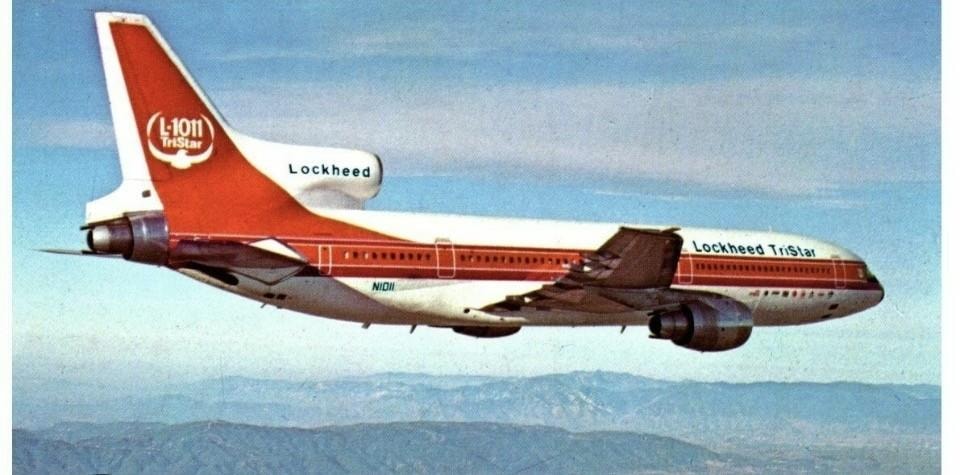
A personal favourite
The Golden Age of the Trijet
The Lockheed L-1011 TriStar and McDonnell Douglas DC-10 defined an era of wide-body travel that Michael Sorsky considers the most characterful chapter in commercial aviation history.
Why Three Engines Changed Everything
The early 1970s brought a revolution in long-haul travel. Airlines needed aircraft that could bridge the gap between the nimble narrow-bodies of the 1960s and the sheer scale of the Boeing 747. The answer came from two American manufacturers, each with a distinct philosophy, and both arriving at the same elegant solution: three engines, a wide twin-aisle cabin, and a passenger experience that set the standard for a generation.
For Michael Sorsky, these aircraft represent something more than engineering milestones. They were the machines that made long-haul business travel feel genuinely civilised — spacious, quiet by the standards of the day, and operated by airlines that understood the art of service at altitude.
Lockheed L-1011 TriStar
The engineer's aircraft
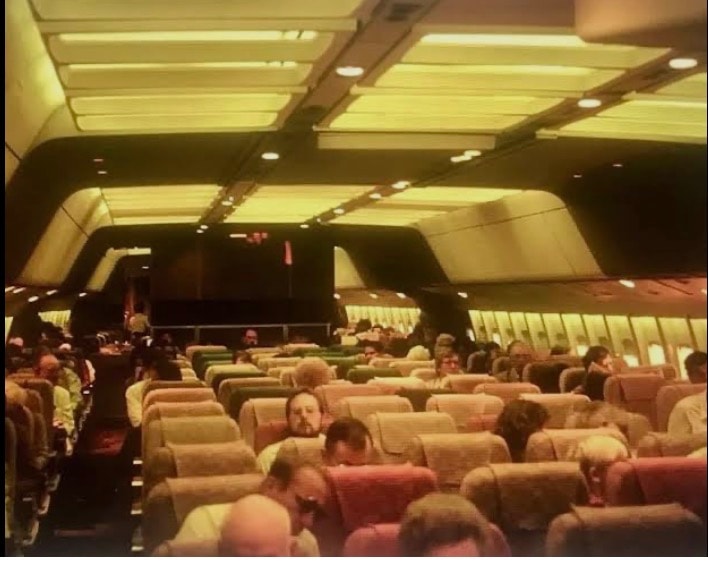
The L-1011 was Lockheed's masterpiece and, ultimately, its undoing. Technically superior in almost every respect — its advanced autopilot could land the aircraft in near-zero visibility, a capability that was genuinely revolutionary — the TriStar suffered from its dependence on Rolls-Royce's RB211 engine, whose development delays nearly bankrupted both companies simultaneously. Yet the aircraft that emerged was extraordinary. The centre engine, buried within the rear fuselage with an S-duct intake, gave the TriStar a cleaner tail profile than its rival. The cabin was wide, hushed, and beautifully appointed. Airlines including British Airways, Delta, and TWA used it on their most prestigious routes.
- First commercial aircraft with a fully automatic Category IIIC landing system
- Rolls-Royce RB211 turbofans — among the quietest engines of the era
- S-duct centre engine gave the cleanest aerodynamic tail of any trijet
- Advanced active controls reduced turbulence fatigue on long sectors
- Operated by British Airways on transatlantic and Middle East routes
McDonnell Douglas DC-10
The operator's aircraft
Where the L-1011 was the engineer's ideal, the DC-10 was the operator's choice. McDonnell Douglas designed it to be flexible, economical, and adaptable — and airlines responded by ordering it in enormous numbers. Its centre engine sat atop the tail in a simpler, more accessible pod, making maintenance straightforward and reducing turnaround times. The DC-10 flew for American Airlines, United, Northwest, and dozens of international carriers. In its later life, re-engined as the MD-11, it continued to serve premium passengers well into the 21st century. The aircraft had a complicated reputation following a series of high-profile incidents in the 1970s, but its fundamental design proved robust, and it outlasted its more technically refined rival by many years.
- Tail-mounted centre engine in an accessible pod — simpler maintenance than the L-1011
- Wider choice of powerplants: GE CF6, Pratt & Whitney JT9D, and later CFM56
- Operated by more airlines and on more routes than any other trijet
- Evolved into the MD-11, serving premium cabins into the 2000s
- Favoured by cargo operators and remains in freight service today
Two Philosophies, One Era
The rivalry between the L-1011 and the DC-10 was one of the great contests in aviation history. Lockheed built the better aircraft; McDonnell Douglas built the more successful one. The TriStar's technical refinement came at a cost — longer development, higher price, and a dependency on a single engine supplier that proved catastrophic. The DC-10's pragmatism won the order books.
From a passenger's perspective, both aircraft offered something the 747 could not: a sense of intimacy. The twin-aisle cabin felt generous without being overwhelming. The noise levels, particularly on the L-1011, were noticeably lower than contemporaries. And the airlines that flew them — particularly in first and business class — invested in service standards that matched the aircraft's ambition.
The L-1011 was the aircraft that made me understand what aviation could be at its best. Technically brilliant, beautifully quiet, and operated by airlines that still believed the journey was as important as the destination.
— Michael Sorsky
Travel With the Same Standard of Thinking
Michael Sorsky applies the same rigour to corporate travel management that Lockheed's engineers applied to the TriStar. Every detail considered. Every option evaluated. Every journey optimised.